

The Man Who Dared to Question
Imagine living in a city where public squares were places of debate, political decisions could change lives, and a well-formed question might be more valuable than a confident answer. In Athens, about 2,500 years ago, Socrates became known for doing exactly that. He asked people to examine what they thought they knew, especially when the subject was justice, courage, wisdom, or goodness.
Socrates lived in Athens from about 469–399 BCE and became one of history’s most influential philosophers. We can cautiously say that he was an Athenian of the deme Alopece. His father was Sophroniscus and his mother was Phaenarete. Plato’s Theaetetus presents Phaenarete as a midwife, while the traditional description of Sophroniscus as a stoneworker comes from later evidence and should be treated with more caution.
Details about Socrates’ childhood are sparse. That means responsible history should not fill the gaps with invented scenes, dramatic conversations, or imagined childhood lessons. Ancient accounts instead give us a picture of his adult life shaped by public conversation, civic life, and military service according to ancient sources. He was also associated with a persistent examination of ideas and the people who claimed to understand them.
Socrates left no books of his own. Most surviving knowledge about him comes from Plato and Xenophon, while Aristophanes and later writers provide different perspectives. These sources are literary, philosophical, comic, or later accounts, so they must be read critically. This article explores lessons connected with the surviving portraits of Socrates; it does not claim that every later story is a verbatim record of what he said or did.
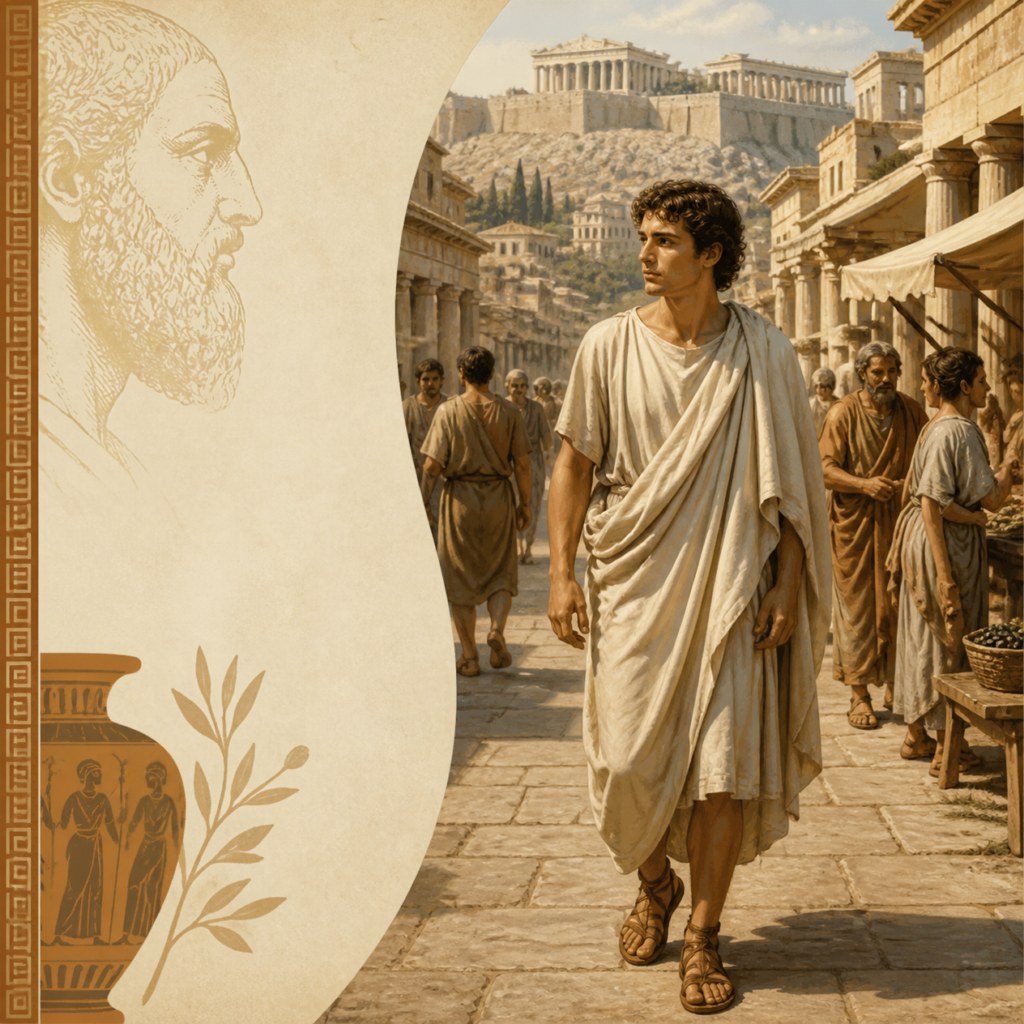
Lesson One: Never Stop Asking Meaningful Questions
One of the best-known stories about Socrates comes from Plato’s Apology, especially 20e–23b. Plato presents Socrates saying that his friend Chaerephon asked the oracle at Delphi whether anyone was wiser than Socrates. The priestess reportedly answered that no one was wiser.
This story needs careful handling. It is Plato’s account, not independent proof of the exact wording of the oracle’s response or of every detail surrounding the event. Socrates, as Plato portrays him, did not simply accept the statement as a compliment. He tried to understand what it could mean.
He spoke with politicians, poets, and craftsmen who were reputed to be wise. His conversations did not show that these people knew nothing. A politician might understand public affairs, a poet might create powerful works, and a craftsperson might possess genuine technical skill. The recurring problem, according to Plato’s account, was that expertise in one area could become an assumption of wisdom about everything.
Socrates’ possible advantage was recognising the limits of his own knowledge. He did not treat uncertainty as a personal failure. Instead, he made it a reason to investigate more carefully. For students, this lesson is practical: ask questions that clarify meaning, evidence, assumptions, and consequences.
For example, if a classmate says, “Homework is always harmful,” a thoughtful response is not simply to agree or disagree. You might ask: What does “harmful” mean here? Is the claim about stress, learning, sleep, or free time? What evidence supports it? Are there situations in which a small amount of practice helps? These questions can turn a slogan into an inquiry.
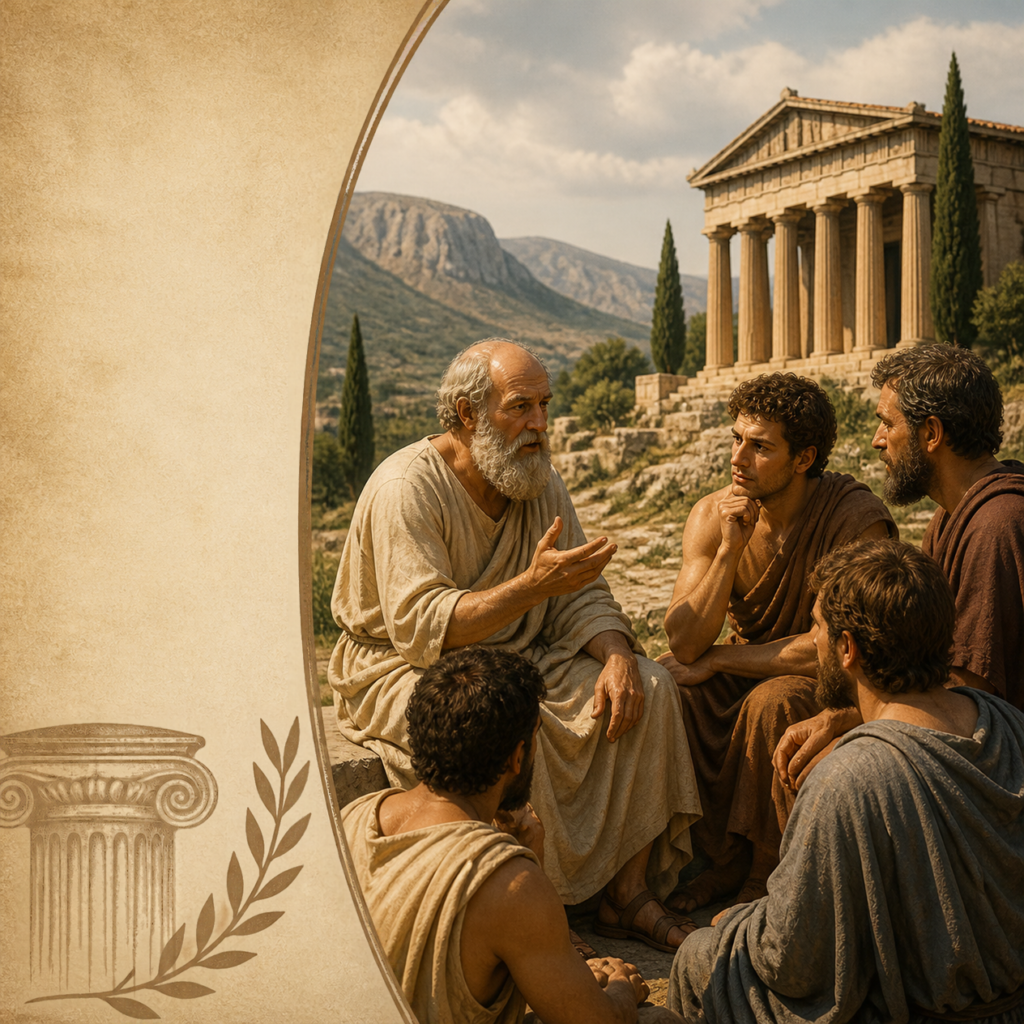
Lesson Two: Do Not Accept Every Statement Without Examination
Socrates questioned respected citizens about justice, courage, wisdom, goodness, and other ideas that people used every day. His method was not merely to ask questions once and move on. He followed an explanation to see whether it was clear, consistent, and able to deal with difficult examples.
In simple language, the Socratic method often works like this: begin with a claim, ask what its key words mean, test it with examples, identify contradictions or unanswered questions, and revise the claim when necessary. The purpose is not to embarrass someone. It is to discover whether an idea can withstand careful examination.
The same habit matters online. Suppose a social-media post says, “Everyone is saying this study proves that teenagers cannot concentrate.” Before sharing it, ask: What is the original source? Who conducted the study? How large was the sample? When was it published? What was the study actually measuring? What was the context? Does the headline overstate the conclusion?
Perhaps the research examined a narrow group, measured one kind of attention, or reported an association rather than a cause. Those details do not automatically make the study useless. They help you understand what it can and cannot show. Examination protects you from both careless belief and careless rejection.
Questioning is not the same as cynicism. Cynicism assumes that nothing deserves trust. Good examination is more balanced: it gives claims a fair hearing, looks for evidence, notices weaknesses, and remains willing to change its mind. That is a valuable habit in classrooms, friendships, family discussions, and digital communities.
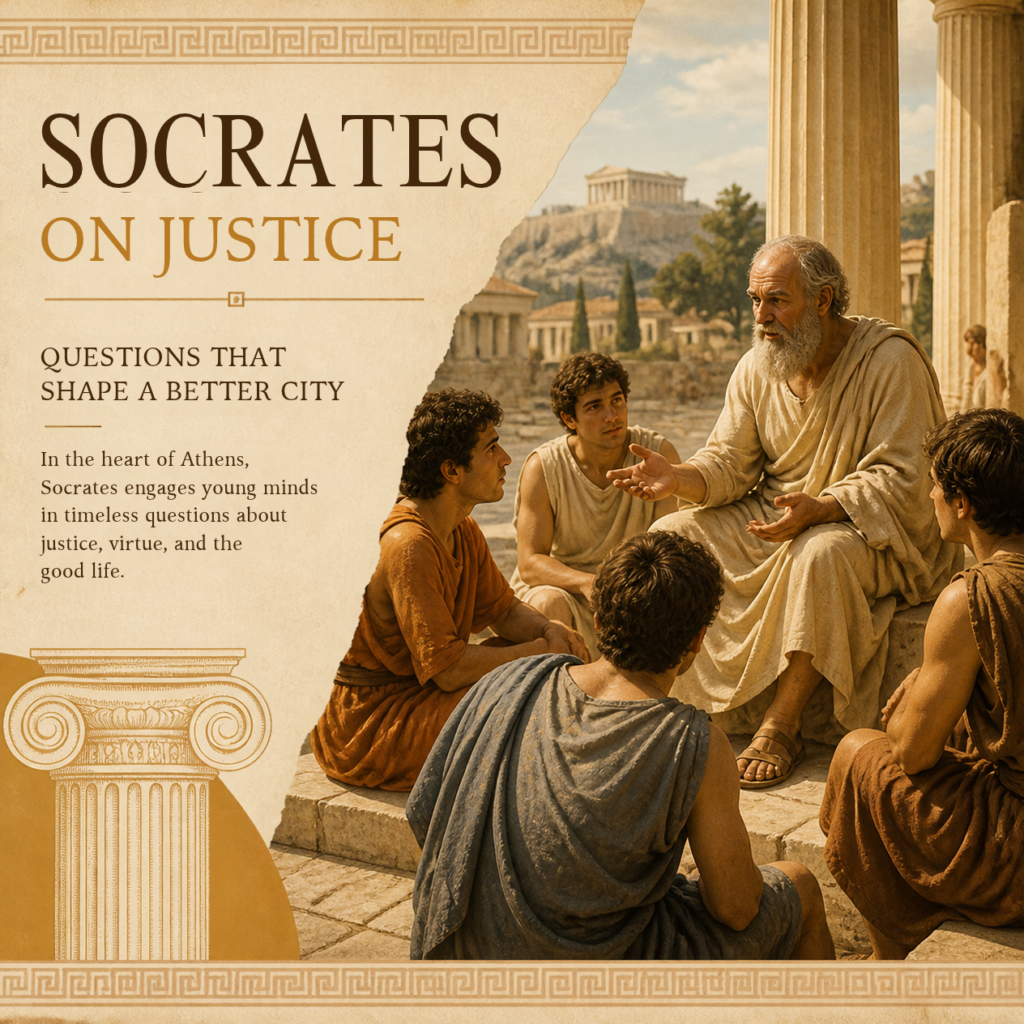
Lesson Three: Knowledge Begins with Intellectual Honesty
In 399 BCE, Socrates was tried in Athens during a period marked by political tension and the restoration of democracy after the rule of the Thirty Tyrants. The formal accusations, as presented in the ancient tradition, involved not acknowledging the city’s gods, introducing new divine beings, and corrupting the young.
Plato’s Apology presents a literary and philosophical reconstruction of the defence. Plato says he was present, but the work should not be treated as a verbatim transcript. It presents Socrates’ reported commitment to examining beliefs and his argument that unexamined confidence can become dangerous.
Intellectual honesty means admitting what we do not know, checking evidence, distinguishing confidence from proof, and correcting mistakes when better reasons appear. It does not mean having no knowledge, refusing to make decisions, or treating every opinion as equally reliable. A person can act responsibly while still acknowledging uncertainty.
Imagine a student preparing a science project. The student finds a result that supports the first idea and ignores several results that complicate it. Intellectual honesty would mean recording the unexpected evidence, considering possible errors, and explaining what the experiment does not prove. The final project might be less dramatic, but it would be more trustworthy.
This habit also improves self-knowledge. Saying “I may be wrong” can feel uncomfortable, yet it creates room for learning. When people confuse certainty with truth, they may defend a mistake simply because they have already announced it. Socrates’ example, as Plato presents it, invites us to value honest inquiry more than the appearance of being right.
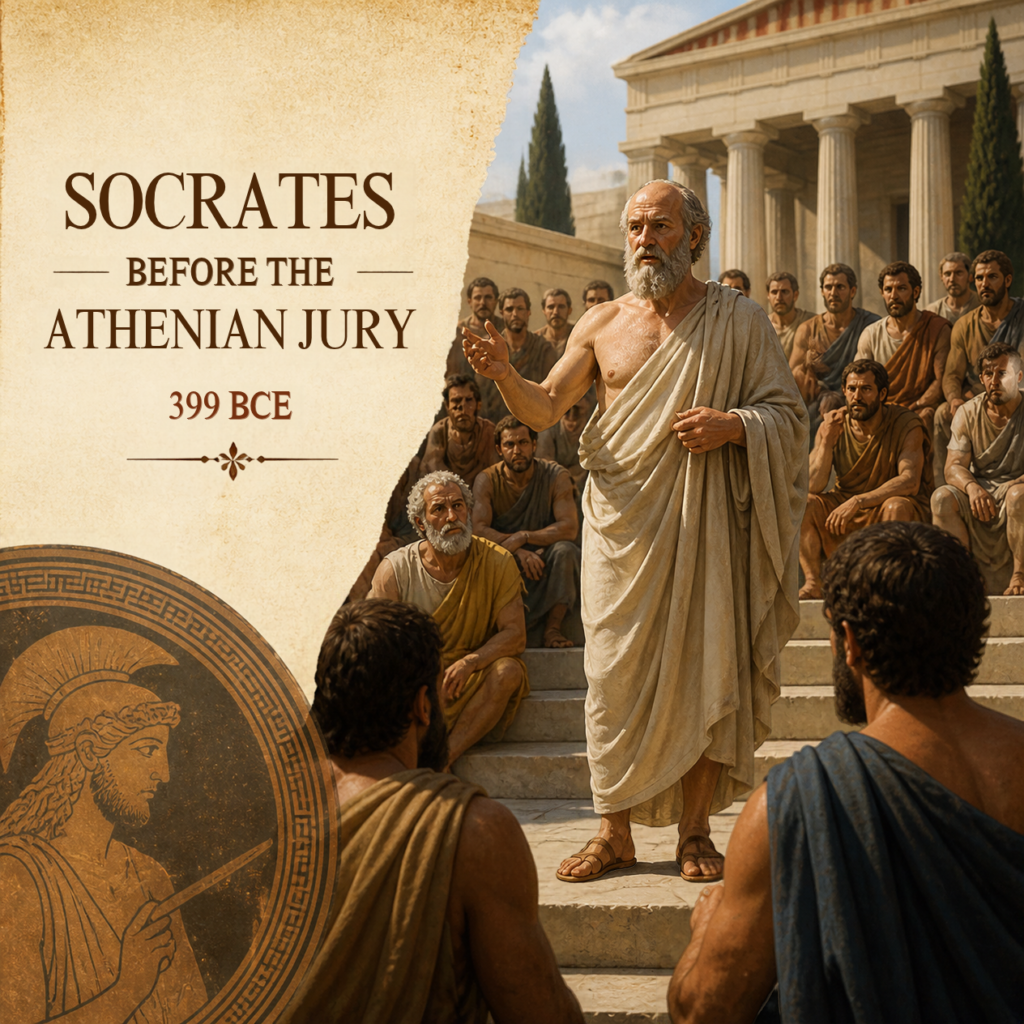
Lesson Four: A Good Question Can Be More Valuable Than a Quick Answer
Socrates is remembered primarily through conversations rather than through a textbook or a system of lectures written by him. His questions made people examine beliefs they had repeated so often that they might never have stopped to ask what those beliefs meant.
In everyday learning, useful questions can change the quality of your understanding:
Instead of asking only what the answer is, ask why it is correct. This helps you understand the reasoning behind a result rather than copying it without meaning.
Instead of memorising a definition, understand its meaning and use an example. An example can reveal whether you can apply an idea, not merely repeat its wording.
Instead of accepting a rumour, investigate its source. Finding where a claim began can show whether it is evidence, opinion, exaggeration, or a misunderstanding.
Try this short study routine. Write down a claim, define its key words, ask what evidence would support it, look for a counterexample, and state what remains uncertain. For instance, when studying history, you might ask not only what happened but also which source describes it, what purpose that source served, and what information may be missing.
A good question is not automatically superior to a good answer. The value lies in using questions to reach better-supported understanding. Questions open the door, but evidence, reasoning, and careful listening help you decide where the door leads.
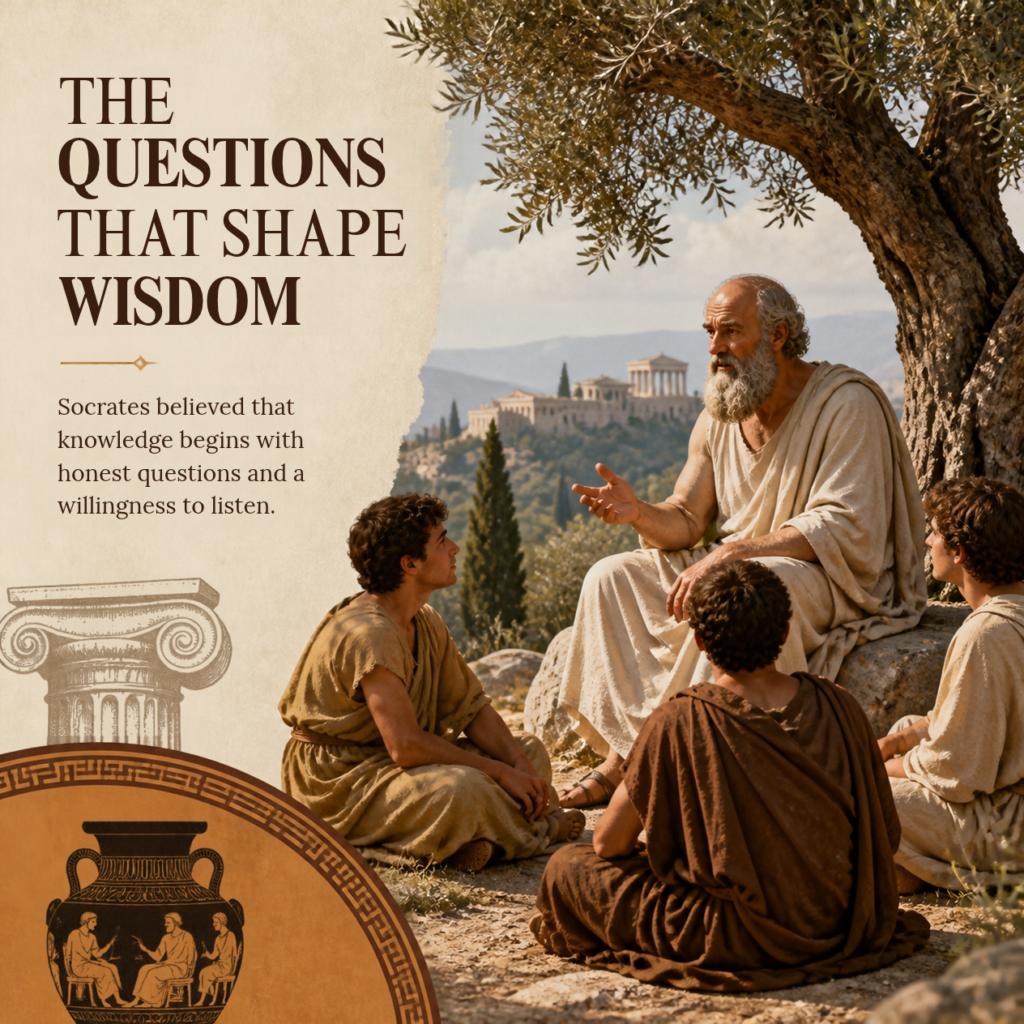
Lesson Five: Think Independently and Respectfully
In Plato’s Apology 32c–e, Socrates says that under the Thirty Tyrants he and four others were ordered to bring Leon of Salamis to Athens for execution. Socrates says that he refused to take part and went home instead. This is an account preserved in Plato’s writing, not a modern courtroom transcript or an independently verified report.
The episode suggests the importance of resisting an order one considers unjust. At the same time, it does not require us to present Socrates as a flawless political hero. The story comes through a particular author, in a work shaped by philosophical and persuasive aims. Responsible readers can consider its moral significance without claiming more historical certainty than the evidence permits.
Plato’s Crito presents another famous scene. While Socrates is imprisoned, his friend Crito urges him to escape. Socrates refuses in the dialogue, arguing that wrongdoing should not be repaid with wrongdoing. The imagined Laws of Athens also challenge him, claiming that escaping would damage the legal order to which he had been subject.
Crito is Plato’s philosophical dialogue; it does not establish that the conversation occurred word for word. Its value lies partly in the moral problem it explores: how should a person respond when personal safety, friendship, law, justice, and loyalty seem to conflict?
Together, these episodes connect independent thinking with courage, fairness, and respectful disagreement. Independent thinking is not simply contradicting everyone. It means giving reasons, listening to objections, recognising the consequences of a choice, and accepting responsibility for what you decide.
What Today’s Students Can Learn from Socrates
The five lessons above are not instructions to imitate every detail of an ancient life. They are habits that can help students learn more carefully, communicate more responsibly, and make wiser choices in a world crowded with information.
Ask questions in the classroom
When a lesson feels confusing, ask for the meaning of an unfamiliar term, the reason behind a conclusion, or an example that makes the idea concrete. A student who asks, “How do we know this result follows from the evidence?” helps the whole class think more clearly.
Verify information before sharing it
Before forwarding a dramatic post, pause and check the original source, date, author, and context. A photograph may be real but connected to a different event, and a genuine study may be described inaccurately by a headline. Verification is a form of respect for the people who will receive your message.
Accept mistakes and learn from them
Keep a small record of errors in homework, experiments, or assumptions. Write what you believed, what the evidence showed, and what you will do differently next time. A corrected mistake can become a stronger lesson than an answer that happened to be right by luck.
Listen respectfully to different opinions
Listening does not mean surrendering your judgement. Let another person finish, restate their point fairly, and then explain where your reasoning differs. This approach is especially useful when classmates disagree about literature, ethics, politics, or school rules.
Think independently instead of following the crowd
Popularity is not proof. If everyone in a group repeats the same claim, ask what reasons support it and whether anyone has checked the evidence. You can disagree without insulting people, and you can change your mind without feeling defeated.

Socrates remains relevant because education is more than storing information. Responsible decision-making requires examination. Curiosity supports lifelong learning, and respectful dialogue can improve both individual judgement and civic life.
The surviving accounts do not give us a perfectly transparent window into one ancient man. They give us portraits shaped by philosophy, comedy, memory, and later interpretation. Yet those portraits still invite a useful question: are we willing to test our assumptions, admit uncertainty, and improve our understanding?
You do not need to live in ancient Athens to practise these habits. You can begin with a claim in a classroom, a headline on a phone, a disagreement with a friend, or a mistake you would rather forget. Pause, ask what the words mean, look for evidence, and listen carefully to the answer.
A thoughtful life grows one honest question at a time.
Frequently Asked Questions
Who was Socrates?
Socrates was an Athenian philosopher who lived approximately from 469 to 399 BCE. He left no writings of his own. Our main ancient portraits come from Plato and Xenophon, while Aristophanes offers a comic portrayal and later writers add further testimony. Because these sources serve different purposes, historians must distinguish between what can be stated cautiously and what remains debated.
What are the five important lessons from Socrates?
The five lessons are to ask meaningful questions, examine statements rather than accepting them automatically, practise intellectual honesty, value questions as tools for understanding, and think independently while respecting others. These are modern summaries inspired by ancient portraits, not a list written by Socrates himself.
Why did Socrates ask so many questions?
In Plato’s account of the oracle story, Socrates questioned people who were considered wise in order to understand what the oracle’s message meant. His questions tested definitions, assumptions, consistency, and evidence. The account is Plato’s presentation, so it should not be treated as an independently verified record of every conversation.
What was the Socratic method?
The Socratic method is a question-led approach to examining ideas. A person begins with a claim, clarifies its meaning, tests it with examples, considers contradictions or unanswered questions, and revises the claim when needed. It is not merely arguing for sport; its purpose is better-supported understanding.
What can students learn from Socrates today?
Students can learn to ask for clarification, check sources before sharing claims, admit and correct mistakes, listen respectfully, resist group pressure, and develop reasoning alongside memorisation. Stories about Leon of Salamis and the escape discussion in Crito also raise questions about justice and responsibility, but both come through literary accounts rather than independently verified transcripts.
Sources and Further Reading
The historical Socrates is difficult to reconstruct because he left no writings. The surviving portraits were created for different purposes: some are philosophical, some comic, some based on recollection, and some come from later interpretation. Reading them together can reveal important themes while still leaving room for uncertainty.
Plato, Apology, especially 20e–23b and 32c–e. The oracle story and the account of Leon of Salamis are presented through Plato’s work. Translations vary, so readers should compare editions when exact wording matters.
Plato, Crito. This is a philosophical dialogue about the proposed escape from prison and the relationship between justice, wrongdoing, law, and civic obligation. It should not be treated as a word-for-word transcript.
Plato, Theaetetus 149a. This passage depicts Phaenarete, Socrates’ mother, as a midwife. It does not provide a complete biography of her or of Socrates’ childhood.
Xenophon, Memorabilia and Apology. Xenophon offers additional ancient portraits. His accounts do not automatically confirm every detail in Plato, and scholars debate how the different accounts relate to one another.
Aristophanes, Clouds. This contemporary comedy presents a sharply different and satirical image of Socrates. It is valuable evidence for his public reputation, but comedy is not the same as biography.
Stanford Encyclopedia of Philosophy, “Socrates.” A scholarly overview of Socrates, the ancient sources, and the difficulties involved in assessing the evidence.